
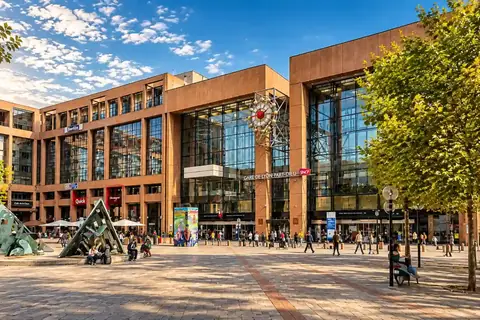
Click a word to unfold.
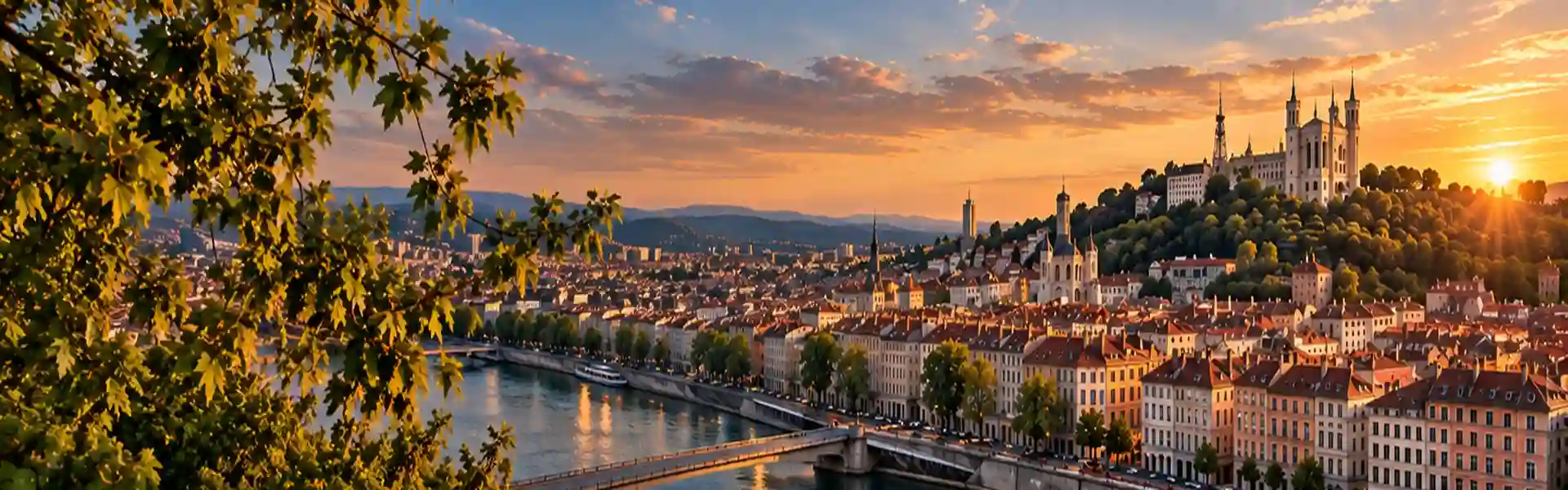
Discover Lyon
Lyon, the independent guide
History, food, heritage, culture and transport: our independent guide helps you explore the best of Lyon, an exceptional city.
- 2,000 yearsof history
From Lugdunum to today, a city with a rich past.
- 1998UNESCO listed
The historic site of Lyon is a World Heritage Site.
- 2 riversRhône and Saône
They meet at the southern tip of the Presqu'île.
- 4 + 7 linesof metro and tram
The network map is available on this site (in French).
Explore Lyon
Choose your theme
Articles, tips and ideas to discover Lyon in all its facets.
Must-sees
Lyon's must-sees
Discoveries, tips and favourites to make the most of the city, all year round.
 History
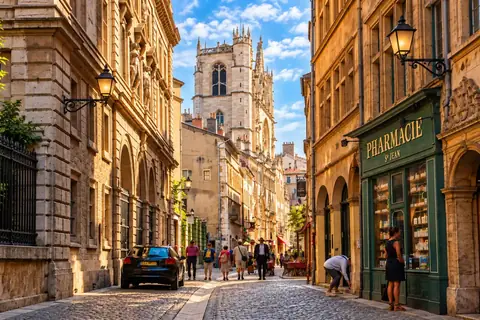
Old Lyon and its traboules
Cobbled lanes, traboules and Renaissance façades below Fourvière.
 History
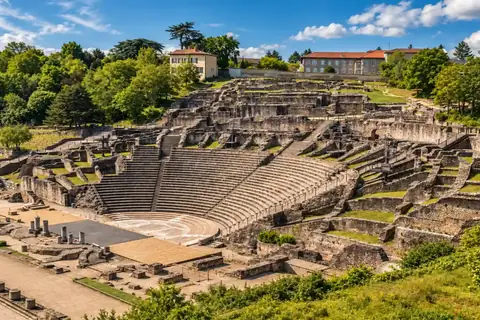
Lugdunum, the Rome of the Gauls
Roman theatres and the capital of the Gauls on Fourvière hill.
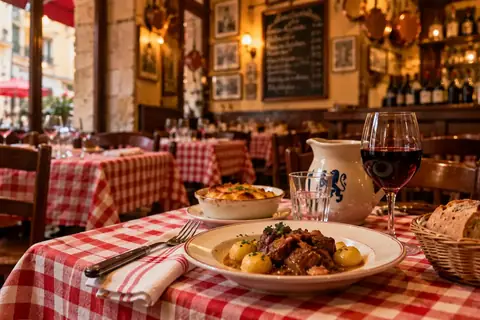 Food
Bouchons and specialities of Lyonnaise cuisine
Quenelles, andouillette, Lyon salad: the traditional tables.
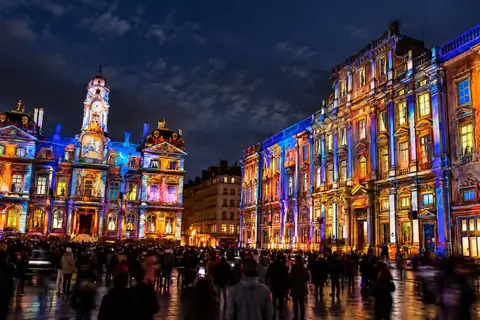 Culture
The Festival of Lights in Lyon
Four free evenings of light around 8 December.
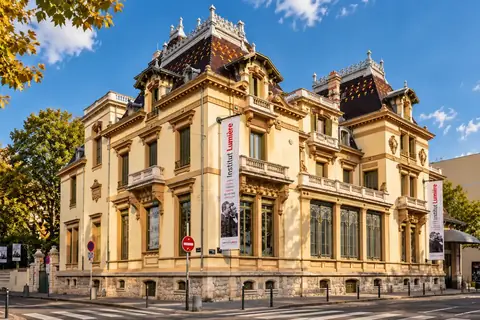 Culture
The Lumière brothers and the birth of cinema
The Institut Lumière, birthplace of the cinematograph, in Monplaisir.
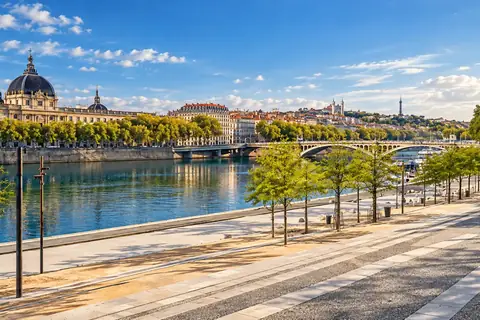 Nature
The Rhône and the Saône in Lyon
Riverbanks, confluence and bridges: a walk between the two rivers.
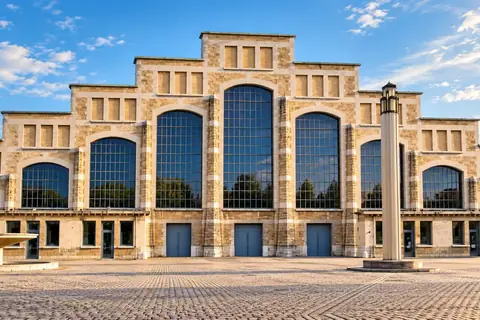 Heritage
Lyon's architecture
From the Fourvière basilica to the Halle Tony Garnier.
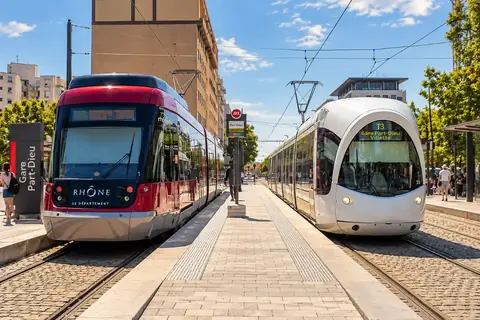 Travel
Metro and tram map
Lines A to D and T1 to T7, stations and interchanges (in French).
Browse the map
How to get here, when to go, how to get around.
Lines A, B, C, D and T1 to T7, stations and interchanges (in French).
Read the pageLyon is served by two main railway stations, Part-Dieu (the main one) and Perrache, by Lyon–Saint-Exupéry airport 25 km away, and by a network of motorways.
Read the pageLyon has a temperate climate with oceanic, continental and Mediterranean influences.
Read the pageLyon is organised around two rivers and two hills: the centre sits on the Presqu'île between the Rhône and the Saône, with Old Lyon and Fourvière to the west, the Croix-Rousse to the north and the left bank of the Rhône to the east.
Read the pageWhere to find the tourist office, which numbers to call in an emergency, where to recover a lost item and which insurance to check: the essentials to know before or during your stay.
Read the page
From Lugdunum to the Resistance.
Lyon was founded in 43 BC under the name Lugdunum, on Fourvière hill.
Read the pageOld Lyon, at the foot of Fourvière hill, is one of Europe's largest Renaissance districts.
Read the pageLyon has been a major silk centre since the 15th century.
Read the pageLyon is nicknamed the capital of the Resistance, a phrase attributed to General de Gaulle in 1944.
Read the page
Bouchons and Lyon specialities.
Lyonnaise cuisine rests on bouchons, friendly restaurants serving traditional cooking, and on the legacy of the mères, women cooks who became restaurateurs.
Read the pageThe pink praline tart is one of Lyon's most emblematic desserts: a shortcrust base filled with a cream of crushed pralines, lifted with a little lemon.
Read the page
Cinema, Guignol, art and festivals.
The Festival of Lights takes place every year around 8 December.
Read the pageCinema was born in Lyon: Louis Lumière patented the cinematograph there in 1895 and the first film, Workers Leaving the Lumière Factory, was shot there.
Read the pageLyon hosts major events all year: Quais du Polar in spring, Nuits sonores in May, Nuits de Fourvière in summer, Festival Lumière in October, the Festival of Lights in December, and two alternating biennials, contemporary art and dance.
Read the pageGuignol is a glove puppet created in Lyon in 1808 by Laurent Mourguet, a former canut turned puppeteer.
Read the pageLyon brings contemporary art into public space: place des Terreaux by Daniel Buren, decorated car parks, murals, and architecture by Nouvel, Piano and Calatrava.
Read the pageLyon has been a breeding ground for creators since the 16th century.
Read the page
Rivers, parks and gardens.
Lyon is built where the broad, powerful Rhône meets the slow, winding Saône.
Read the pageLyon keeps adding green spaces: the Parc de la Tête d'Or, the Parc de Gerland, the Parc des Hauteurs and many small neighbourhood gardens.
Read the page
Lyon's architecture.
Lyon's historic site, listed by UNESCO in 1998, shows every era of architecture, from Antiquity to today.
Read the page
Gone, traboule, mâchon, canut: the city's vocabulary.
Read the pageChild, kid. A “gone” is a young Lyon native.
Read the pageWoman or wife, in colloquial Lyon speech. Madelon is Guignol's “fenotte”.
Read the pageA way of saying goodbye: “see you soon”.
Read the pageSweets, treats.
Read the pageA small candle in a coloured glass, placed in windows on 8 December.
Read the page
A traditional, convivial restaurant serving regional cooking.
Read the pageA woman cook who, after working for wealthy families, opened her own restaurant (Mère Brazier).
Read the pageA hearty mid-morning snack: cold cuts, tripe, muzzle salad.
Read the pageA thick-bottomed 46 cl bottle in which Beaujolais is served.
Read the pageFresh white cheese with herbs, shallot and vinegar. There is no brain in it.
Read the pageA square of marinated, breaded and grilled tripe, served with gribiche sauce.
Read the pageA large dry pork sausage whose shape recalls the Légion d'honneur rosette.
Read the pageA dry sausage wrapped in netting, resembling a swaddled baby.
Read the pageA vegetable related to the artichoke, cooked au gratin in winter.
Read the pageA mixture of eggs, butter and flour, traditionally made with pike, served with Nantua sauce.
Read the pageA flat fritter dusted with icing sugar, eaten at carnival time.
Read the pageA thick, filling pancake, filled as you like.
Read the pageA sweet of blue-green marzipan and praline chocolate, born from a vow in 1643.
Read the pageAn almond coated in pink sugar, used in tarts and confectionery.
Read the page
A passage, often vaulted, that crosses a building or courtyard to link two streets.
Read the pageThe central district between the Rhône and the Saône, from the Terreaux to the Confluence.
Read the pageNickname for Lyon's funiculars, which climb to Fourvière and Saint-Just.
Read the page“The hill that prays”: nickname for Fourvière, with its basilica and Roman theatres.
Read the page“The hill that works”: nickname for the Croix-Rousse, the canuts' district.
Read the pageA cold, dry wind from the north.
Read the pageA wind from the south, the most frequent and the strongest, which often signals rain.
Read the page
A silk weaver, notably in the Croix-Rousse.
Read the pageA silk manufacturer or merchant who employed the canuts.
Read the pageA 19th-century mutual-aid association of canuts.
Read the pageA glove puppet created in 1808 by Laurent Mourguet.
Read the pageA red-nosed cobbler, Guignol's friend and a lover of Beaujolais.
Read the page
FAQ
Your frequently asked questions
Find answers to the most common questions about Lyon, getting around and more.
Why is Lyon a UNESCO World Heritage Site?
The historic site of Lyon has been listed since 5 December 1998 for the richness of its architecture, from Roman times to today.
How long do I need to visit Lyon?
A weekend covers the essentials: Old Lyon, Fourvière, the Presqu'île and the Croix-Rousse. The city is compact, and the metro, trams and funiculars complement walking.
How do I get around Lyon?
The TCL network has 4 metro lines, 7 tram lines and 2 funiculars. The metro and tram map is available on this site (in French).
Updated 25 October 2026.