
Home / History / Lugdunum, the Rome of the Gauls
Lugdunum, the Rome of the Gauls
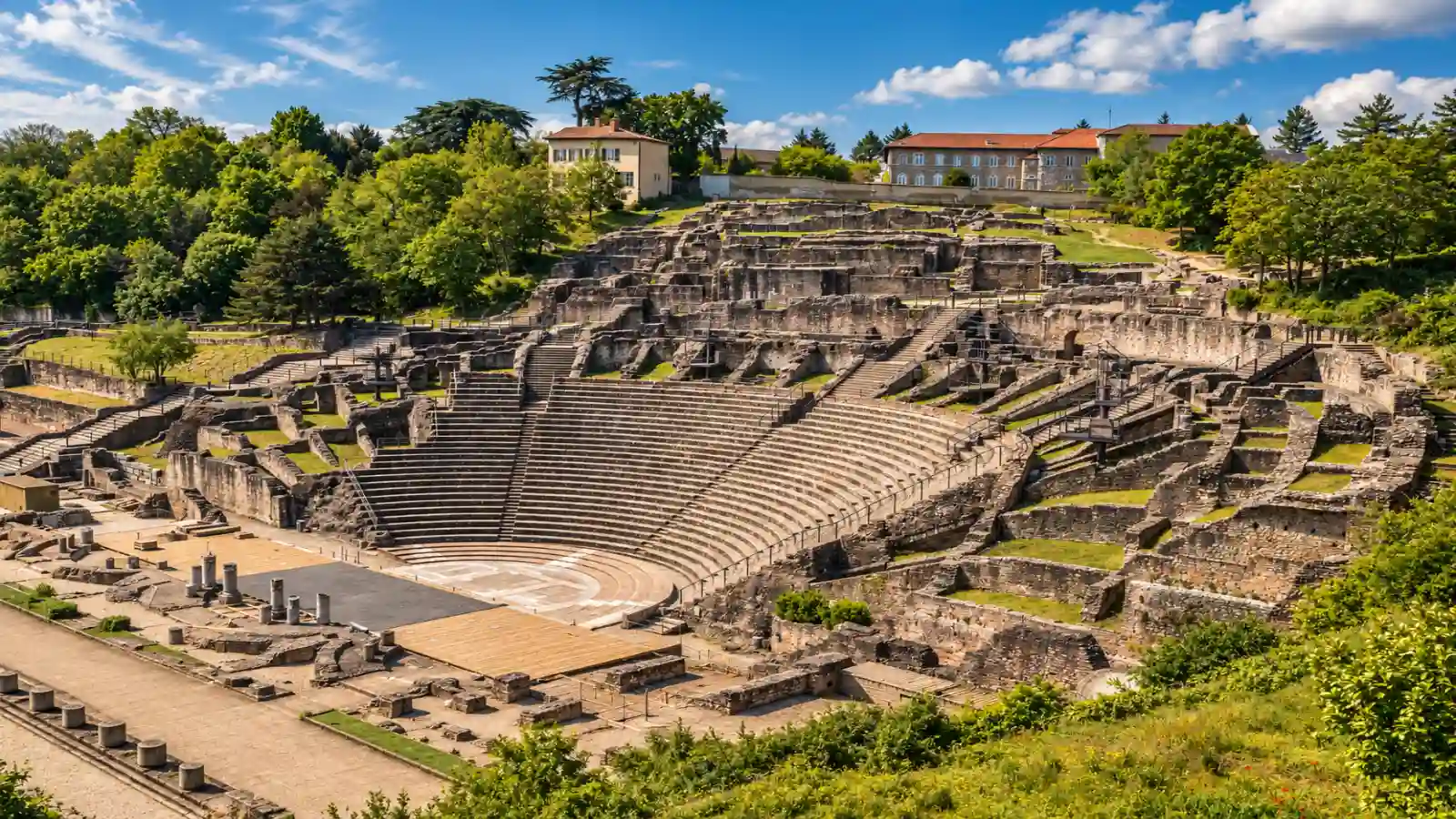
Lyon was founded in 43 BC under the name Lugdunum, on Fourvière hill. Under Augustus it became capital of the Three Gauls and one of the main centres of Roman rule in the West.
A founding in 43 BC
Lucius Munatius Plancus, a lieutenant of Caesar, set up the colony on Fourvière hill, where a few merchants were already established. Excavations show that the site had been inhabited for about 10,000 years and that an important Gaulish centre existed before the Roman conquest.
Trade before the Romans
The city owes its rise to its two rivers, which open the way to the Mediterranean and to northern Europe. As early as 600 BC, Greek pottery and wine from Marseille were arriving here.
Capital of the Three Gauls
Around 15 BC, Augustus stopped here and gave the city this title. Each year the Council of the Gauls brought together delegates from the sixty Gaulish peoples, who swore loyalty to Rome and the emperor. Ceremonies and competitions took place in the Amphitheatre of the Three Gauls, on the slopes of the Croix-Rousse.
A port, martyrs and a bronze tablet
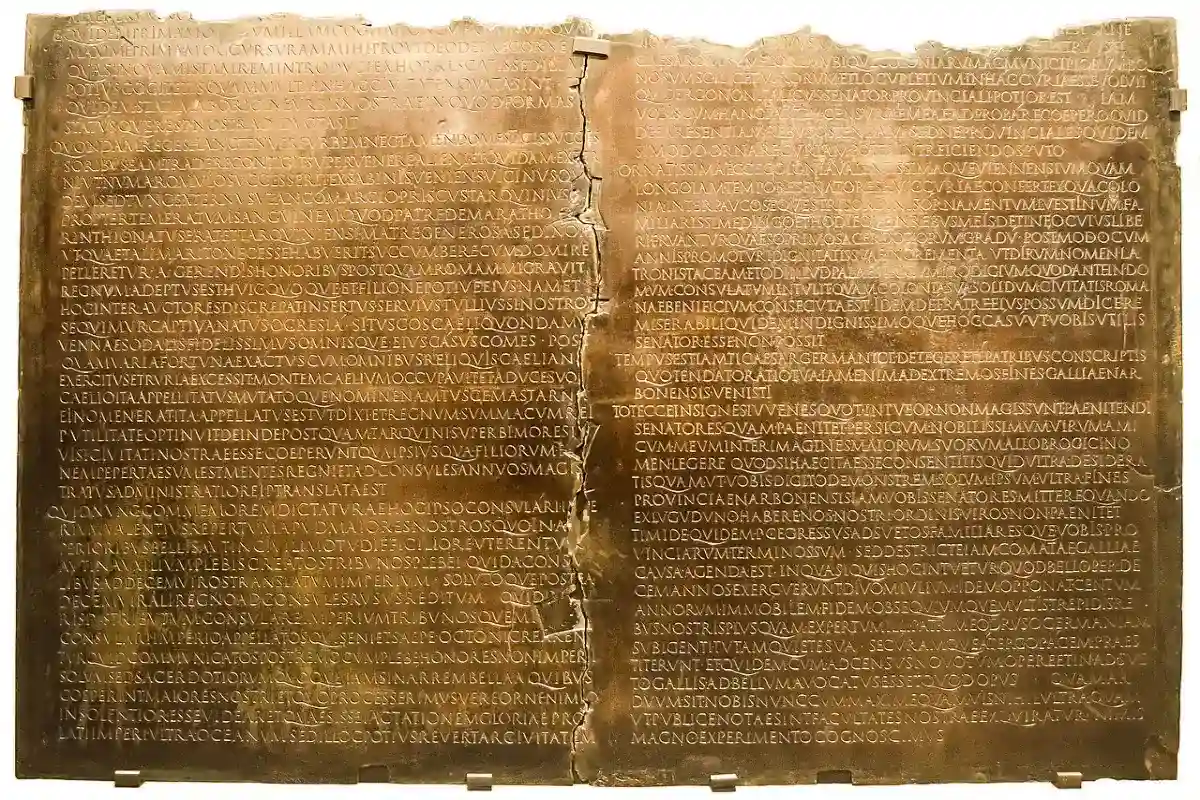
In 2003, work on the Saint-Georges car park uncovered six Gallo-Roman boats from the 1st and 2nd centuries and a wooden jetty, proof of a busy river port. In 177 the young Christian community was persecuted: Bishop Pothinus and Blandina were martyred. The Claudian Table, a bronze plaque bearing a speech by the emperor Claudius (AD 48), was found in 1528 on the slopes of the Croix-Rousse.
In the Middle Ages, the “second Rome”
The Middle Ages benefited from the religious revival: prelates governed the city and adorned it with new buildings, including the church of Saint-Just and the abbeys of Ainay and the Île-Barbe. At the end of the 11th century the archbishop received the title of Primate of the Gauls. Two ecumenical councils were held in Lyon (1245 and 1274) and popes were elected or crowned here: these close ties with Rome prompted talk of a “second Rome”.
What to see today
The Roman theatres of Fourvière, which still host performances in summer, and the neighbouring Lugdunum museum, which displays finds from the ancient city.
Frequently asked questions
When was Lyon founded?
In 43 BC, under the name Lugdunum, by Munatius Plancus.
Why is Lyon called the capital of the Gauls?
Because Augustus made it capital of the Three Gauls, where the Council of the Gauls met every year.
Read more
 Getting to Lyon by train, plane or car
 Bouchons and specialities of Lyonnaise cuisine
Updated 25 October 2026.